If your curls corkscrew tight enough to wrap around a pencil but not a coffee straw, you’re almost certainly 3C. Here’s the care it actually wants.
What is 3C hair?
3C hair is tight corkscrew curls, roughly the diameter of a standard pencil — tighter than 3B’s sharpie-wide loops, but looser than 4A’s crochet-needle coils. The pattern is defined from root to tip, which is what separates it from the S-waves of Type 2.
It’s also the curl type that shrinks the most without bordering on coily. A 3C strand can lose 60–75% of its stretched length when it dries, which is why most 3C readers describe their hair as “shorter than it really is.” That’s not a flaw — it’s shrinkage, a real, measurable behavior of tight curl patterns, and the single biggest reason off-the-shelf product instructions fail on 3C hair.
The hair tends toward low to medium porosity on average, but porosity and curl pattern are separate dimensions — you can be 3C with any porosity. A complete self-diagnosis means reading both. If you’ve never taken a porosity test, the low-porosity guide walks through it with a float test.
How to tell — 3B vs 3C vs 4A
The two confusion lines are 3B/3C and 3C/4A. The fastest read is loop size. Wrap one defined curl around an object: sharpie-wide means 3B, pencil-wide means 3C, coffee-straw-wide or a visible coil means 4A.
Same magnification, same light, three patterns side by side:
- 3B — sharpie. Loop diameter around 12 mm. Shrinkage 40–50% wet to dry. Slow, loose rebound when you pull and release a curl.
- 3C — pencil (you). Loop diameter around 7 mm. Shrinkage 60–75% wet to dry. Fast, tight rebound. Defined from root to tip.
- 4A — coffee straw. Coil diameter around 4 mm. Shrinkage 75%+ wet to dry. Springy S-coil with a visible kink along the strand.
The one question that decides it: wrap one defined curl around an object — sharpie (3B), pencil (3C), or coffee straw (4A)?
The “Am I actually 3C?” tie-breaker
Three quick checks, in the mirror, no products:
- Your curls corkscrew tight — pencil-wide, not sharpie-wide.
- Dry hair shrinks a lot — what looks collar-bone length dry is mid-back wet.
- You see individual defined coils, but the crown frizzes into a halo in humidity.
If two of three land, you’re 3C. If the third is borderline, it’s almost always the crown — humidity behavior is the most variable signal and the least diagnostic of curl pattern.
The care routine
Five steps, 45 minutes active, enough moisture to carry you to day three. The order matters more than the products — if you only change one thing, change the order.
01 · Pre-detangle dry with oil
5 min · dry hair.
Section hair into four. Work a quarter-sized drop of jojoba oil through each section with a wide-tooth comb, tip-to-root. Dry detangling breaks fewer strands than wet for tight corkscrews — the curl pattern slides apart before water glues it into a tangle.
Skip this step on fine 3C — the oil weight will flatten the crown.
02 · Wash with warm water and a sulfate-free cleanser
4 min · wet hair.
Warm — not hot — opens the cuticle enough for lather without stripping sebum. A coin-sized dollop of Foundation Shampoo, scalp-only, two passes. Let the runoff do the work on the mid-lengths. 3C tolerates weekly washing better than 4-types; twice-weekly is fine if you sweat a lot.
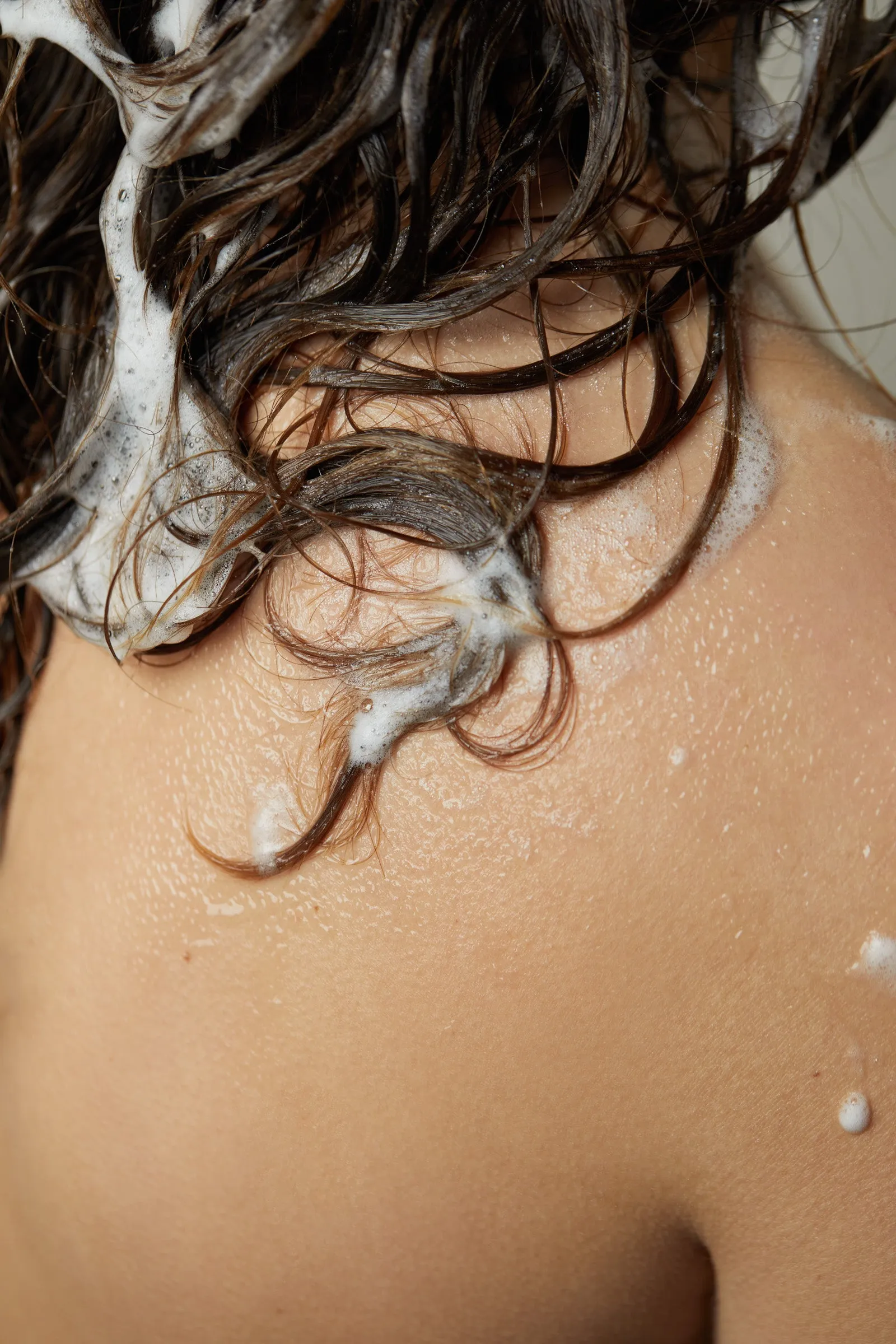
03 · Deep condition, then finger-detangle under the stream
10 min · wet hair.
Section-by-section, squeeze a quarter of Foundation Conditioner through each, then comb with your fingers, tip-to-root. Pull clumps apart, don’t rake. Leave it in for five minutes while you wash your body. Rinse with cool water — this is where definition is won or lost.
If you feel curl clumps forming under your fingers, you’re doing it right. That’s the cast you’ll preserve into styling.
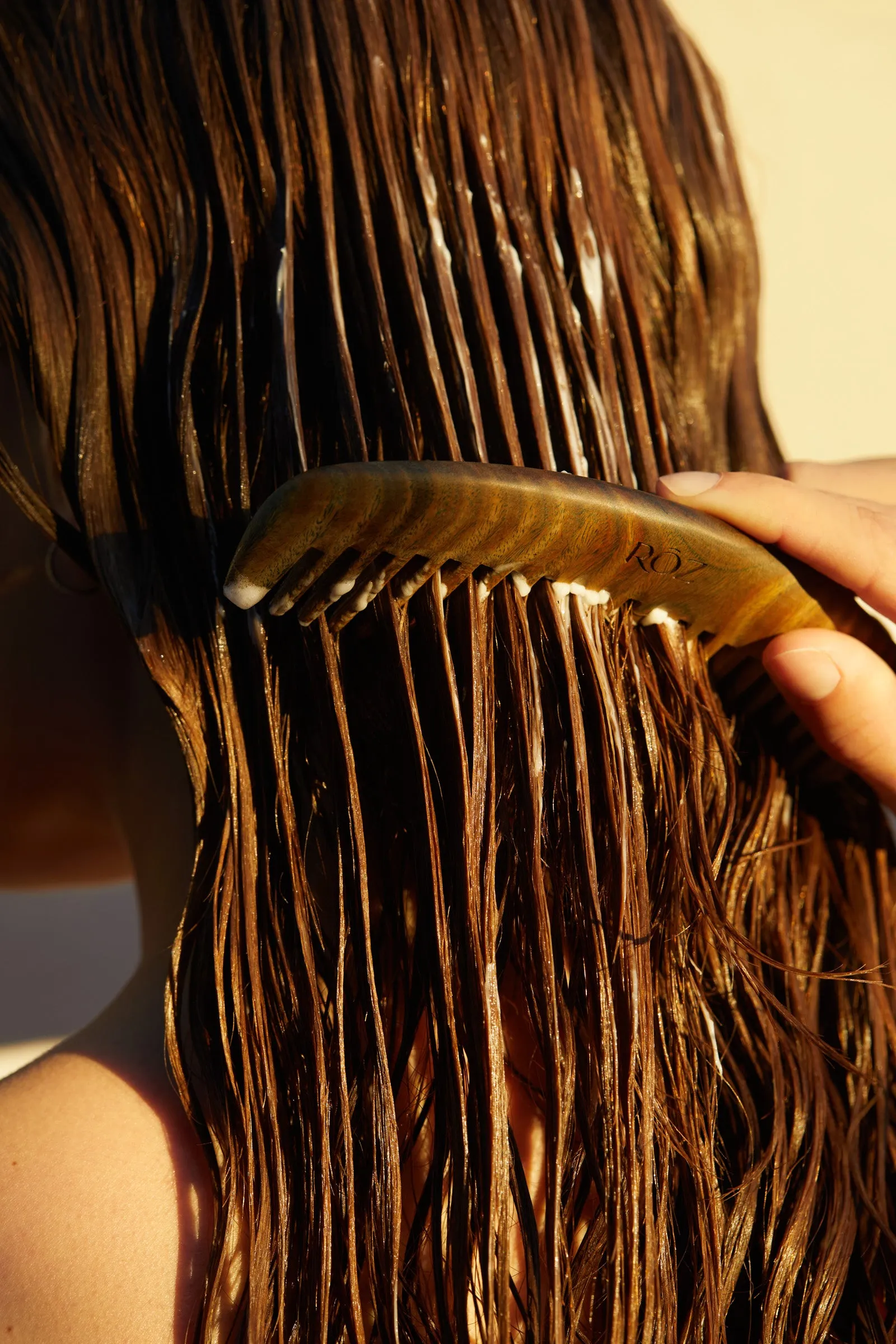
04 · Style upside-down, soaking wet, with a leave-in then a gel
12 min · soaking wet.
Flip your head forward. Apply leave-in first (a two-tablespoon dollop), prayer-hand it through, then squeeze-scrunch. Layer gel on top of that — same technique. Do not touch until it dries.
05 · Air-dry or diffuse, then break the cast
15–30 min · wet to dry.
If you diffuse, use low heat, low airflow, cupping method. Once fully dry, scrunch the gel cast out with a few drops of oil on your palms. The definition underneath should look like it was set in a studio. It was — just by you.
Common concerns for 3C
Shrinkage
3C averages 60–75% shrinkage wet-to-dry. Jawline-length dry can be mid-back wet. It’s physics, not damage — the spring in the coil is structural. If length is the goal, stretch with a roller-set or a tension-dry on low heat; don’t try to weight the curl down with product, it’ll flatten instead of lengthen.
Frizz at the crown
The crown is the most-exposed part of the head to friction, wind, and humidity. Some halo frizz is normal — even desirable; it’s how 3C reads as full, not slicked. When it tips into fuzzy-cloud territory, smooth it with a few drops of lightweight oil on already-dry hair. More gel is not the answer. More gel is how you lock frizz into the cast.
Dry ends
Tight corkscrews don’t conduct sebum down the shaft efficiently, so the ends are the driest part of a 3C head by default. Three fixes, in order of payoff: trim every 10–12 weeks, use your deep-conditioner on the ends first and scalp last, and sleep on a satin or silk pillowcase. A cotton pillowcase is a 50-dollar haircut every night.
Products Mara uses on 3C clients
Mara keeps 3C routines deliberately short. If you have 3C and fifteen products, twelve of them are fighting.
The full wash-day system Mara reaches for in the chair:
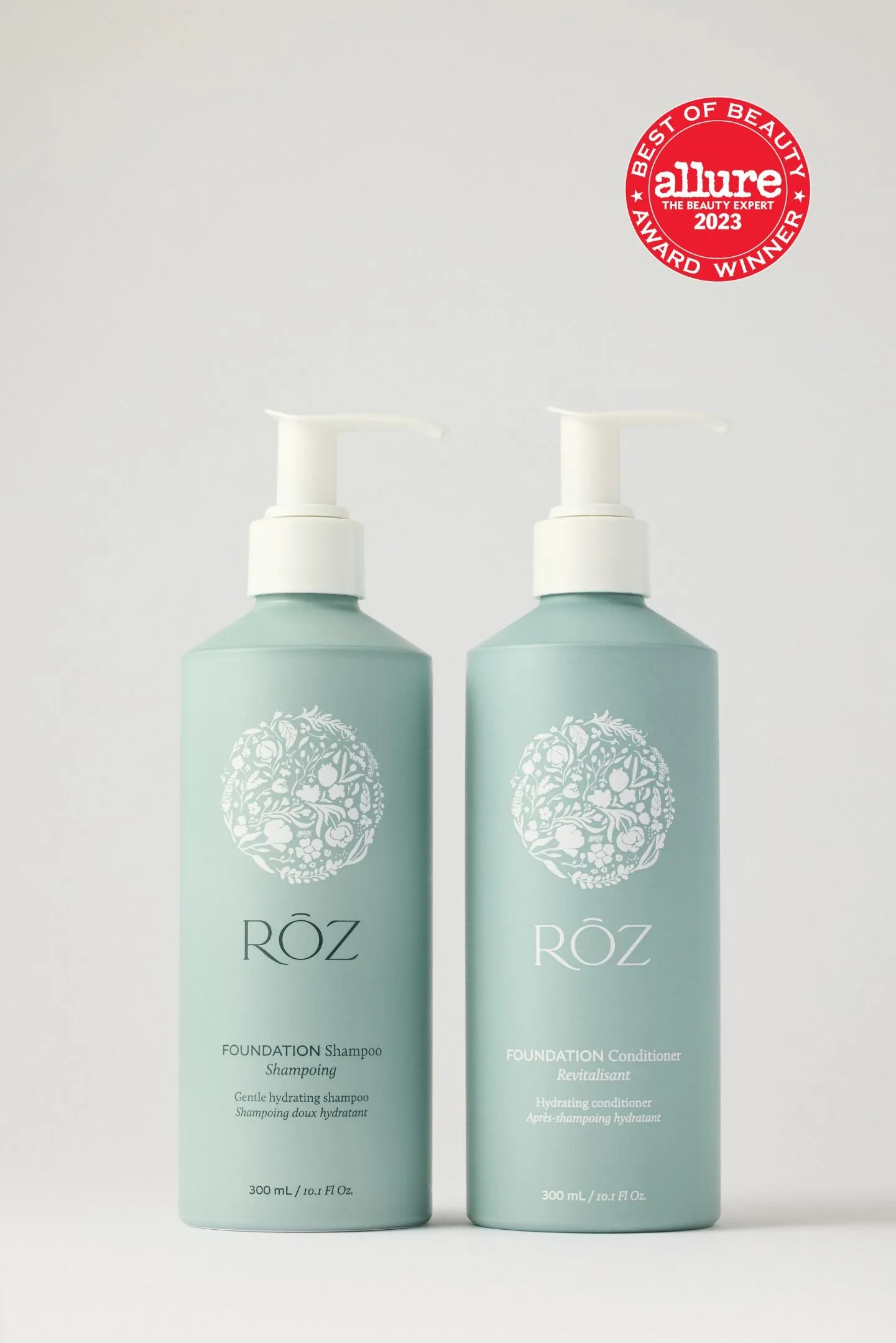
Layer the leave-in and gel of your choice on top — 3C tolerates a wide range of finishing products once the cleanse and condition are dialed in. If nothing else changes, those two steps fix most of what clients walk in complaining about.
When you’re actually 3B or 4A
3C + low porosity is also a common combination that makes every product feel like it sits on top. If products bead or pool instead of absorbing, start your wash with warmer water and give leave-ins a minute to soak in before you scrunch. Read the low-porosity protocol for the full fix.
3C in humidity
Dew point, not relative humidity, is what moves 3C hair. Above ~60°F dew point, the air has enough moisture to pull water into the cuticle, which is when glycerin and honey (humectants) start working for you instead of against you. Below ~35°F dew point, the same humectants pull water out of the hair into the drier air — that’s when 3C gets crunchy and dull.
- Dew point 35–60°F. Humectant sweet spot. Use glycerin leave-ins freely. Your hair will look its best.
- Dew point above 60°F. Expect more volume and more halo frizz at the crown. Shift to anti-humectant finishers (a little silicone or a sealing oil) and keep the routine simple.
- Dew point below 35°F. Swap humectants for emollients — shea, jojoba, argan. Avoid glycerin-heavy leave-ins. Add a weekly moisture mask until the air changes.
FAQ
Frequently asked questions
Is 3C the same as curly or coily hair?
How often should 3C hair be washed?
Why does my 3C look so much shorter than when it's wet?
Can 3C hair become straight with heat?
What products should 3C hair avoid?
Is 3C hair rare?
Can I use a diffuser on 3C hair?
How much shrinkage is normal for 3C hair?
Related types
- 3B hair — sibling, looser. Sharpie-wide spirals, slower spring-back, lighter products.
- 4A hair — sibling, tighter. Coffee-straw coil, visible S, richer moisture protocol.
- Low porosity hair — cross-dimensional read. When 3C products pool on top instead of absorbing.
- Frizz — the crown-halo fix, and when to leave it alone.
Featured in this article