Bond builders are the repair category people reach for when conditioner is no longer enough. They sit in a different lane from shine products, oils, masks, and daily conditioners because the promise is structural: supporting internal hair bonds after bleach, chemical services, or repeated high heat.
That promise needs clean language. A bond builder may improve strength, feel, elasticity, or breakage risk. It does not make every damaged strand brand new, and it is not the right first move for every kind of dryness.
What bond builders are trying to repair
Hair strength comes from several structures working together: the cuticle on the outside, the cortex inside, keratin proteins, lipids, and internal bonds. The most famous are disulfide bonds , which help give hair its shape and strength.
Bleach, relaxers, perms, repeated high heat, UV exposure, and mechanical stress can damage more than the surface. When the inner structure is compromised, hair may stretch, snap, feel gummy when wet, lose curl pattern, or break even when it is conditioned.
That is the bond-builder lane.
| If the hair feels | More likely issue | First product lane |
|---|---|---|
| Dry, dull, rough, tangly | Moisture loss, cuticle lift, friction | Conditioner, humectants, oils, silicones, gentler cleansing |
| Stretchy, gummy, snapping | Internal structural damage | Bond repair or protein support, plus gentler handling |
| Shiny but limp and coated | Film buildup | Reset, cleanse, chelate if water is involved |
| Brittle after bleach or heat | Mixed damage | Bond repair plus moisture and lower heat |
Bond builders vs protein vs conditioner
These categories overlap in the way they make hair feel, but they do not have the same mechanism.
Conditioners improve slip, softness, manageability, and cuticle feel. They are essential for daily care, but they mostly work on the surface.
Proteins and amino acids can temporarily patch, support, or reinforce the hair surface. Hydrolyzed proteins are especially relevant when hair feels weak, but too much protein-style support can make some hair feel stiff.
Bond builders are designed to target internal damage pathways. Different technologies use different chemistry. That is why a true bond-building claim should belong to a specific formula, not to any product that says “repair” on the front.
| Category | Primary job | Best for | Common mistake |
|---|---|---|---|
| Bond builder | Structural support after chemical or heat damage | Bleach damage, gummy stretch, snapping, lost curl pattern | Using it for ordinary dryness |
| Protein treatment | Temporary strength, body, and reinforcement | Weak, limp, over-soft, porous hair | Layering too often until hair feels stiff |
| Conditioner | Slip, softness, detangling, cuticle feel | Daily manageability and friction reduction | Calling surface softness “bond repair” |
| Keratin smoothing | Smoother surface and frizz control depending on service | Salon-led smoothing or texture management | Treating every keratin claim as repair |
| Acidic gloss or pH support | Cuticle alignment and post-color feel | Color-treated dullness or roughness | Expecting it to rebuild broken internal bonds |
The repair label should make the mechanism clearer, not fuzzier. If the product cannot tell you whether it is bond repair, protein support, pH support, or conditioning slip, read it as a general strengthening claim until the formula proves otherwise.
When bond repair is probably the right lane
Bond repair is worth considering when you can name a structural stressor and see behavior that matches:
- Recent bleach, lightening, relaxer, perm, or color correction.
- Hair stretches unusually when wet and then snaps.
- Curls or waves have lost pattern after chemical service or heat.
- Ends break faster than they grow.
- A strand feels weak even after conditioner.
- Heat styling has made hair glassy, brittle, or rough.
If the hair is simply dry after winter, travel, or a too-harsh shampoo, start with cleansing and conditioning first. Not every dry-hair problem is a bond problem.
Where RŌZ fits honestly
RŌZ is not a substitute for a dedicated bond-building treatment when true bond damage is the issue. That honesty is the point. RŌZ routines can support the surrounding environment: gentle cleansing, conditioning slip, less friction, lower heat dependence, and styling habits that stop new damage.
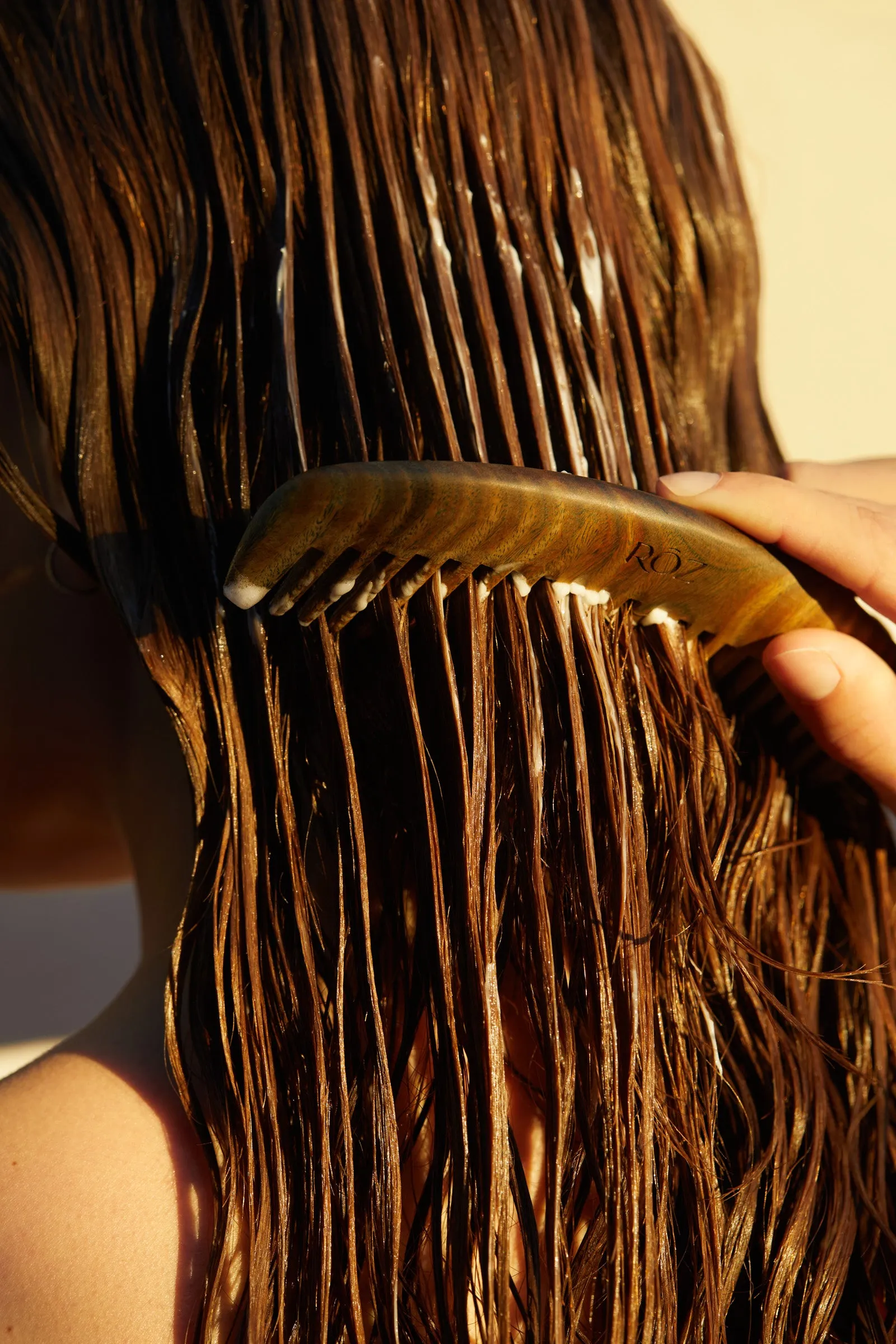
Use Foundation Shampoo and Foundation Conditioner as the daily hair care baseline around a bond-builder protocol when the hair needs gentle cleansing and softness. If the hair is actively snapping after bleach, a true repair system like K18 or Olaplex may be the better first repair lane, then RŌZ can help maintain the care routine around it.
A practical repair sequence
Use the behavior of the hair to choose the order.
| Week | Focus | What to watch |
|---|---|---|
| 0 | Stop the damage source | Lower heat, pause bleach, trim splits that are traveling upward |
| 1 | Identify bond vs moisture | Wet stretch, snapping, gummy feel, curl-pattern loss |
| 2-4 | Add the right repair lane | Bond builder for structural weakness; conditioner and humectants for dryness |
| 4-6 | Rebuild routine friction | Gentle cleanse, conditioner, serum or oil on ends, heat protection |
| 6+ | Judge by behavior | Less snapping, better detangling, curl return, ends holding shape |
If nothing improves after six to eight weeks and the hair keeps snapping, it may not be a product problem anymore. A trim or a larger color-plan change may be the honest answer.
Ingredients and label clues
Bond-building products are easiest to evaluate by named technology, not vague front-label words. Look for the brand’s specific active system, usage protocol, and claim language. Words like “repair,” “restore,” “strengthen,” and “anti-breakage” are not enough by themselves.
Useful label and category clues include:
- Bis-aminopropyl diglycol dimaleate, strongly associated with Olaplex’s bond-repair story.
- Peptides, amino acids, and hydrolyzed proteins, which can support strength but are not automatically bond builders.
- Acidic pH systems, which can help cuticle alignment and post-color feel.
- Conditioning agents and silicones, which improve surface slip and can make damage feel better without repairing internal structure.
Quick answers people ask about bond repair
Does bond repair actually work? It can, when the hair problem is structural damage and the product uses a true bond-building technology. It is less impressive when the issue is only dryness, rough cuticle feel, buildup, or a haircut that needs shape restored.
How often should you use a bond builder? Follow the product protocol first. Many bond-building treatments are not meant to replace every conditioner or mask. Overusing repair steps while ignoring moisture, slip, and lower heat can leave hair feeling better in one way and worse in another.
Is bond repair better than protein? Neither is universally better. Bond repair is the stronger lane for bleach, chemical service, gummy stretch, and snapping. Protein is more of a temporary reinforcement lane. Some damaged hair needs both, but the order matters.
Can you put bond builder on dry hair? Only if the specific product directions say so. Some treatments are used before shampoo, some after shampoo, some on damp hair, and some as leave-ins. The protocol is part of the technology.
What is the most damaging thing to hair? Bleach, overlapping chemical services, repeated high heat, rough brushing, UV exposure, and untrimmed split ends can all stack. Bond repair helps most when the damaging behavior is also reduced.
What bond builders cannot do
- They cannot glue split ends permanently.
- They cannot reverse every bleach mistake.
- They cannot replace a trim when a split is traveling upward.
- They cannot protect hair if the same heat or color habit continues unchanged.
- They cannot make a conditioner into a structural repair treatment.
- They cannot diagnose hair loss or shedding.
Bond repair works best when the behavior matches the mechanism and the rest of the routine stops adding new stress.
The bottom line
Use bond builders when the problem is structural weakness: bleach, chemical processing, high heat, snapping, stretch, gummy feel, or curl-pattern loss. Use conditioners, humectants, oils, and silicones when the problem is surface feel, dryness, slip, or frizz. The best repair routine usually needs both lanes, in the right order.