hair basics
Dry Shampoo: The Complete Guide
By The RŌZ Team · Published August 11, 2026 · Updated August 13, 2026
Dry shampoo is one of the most misunderstood products on the shelf. It does not cleanse hair, and it is not automatically harmful. Used well, it is a timing tool: absorbent particles take up some of the oil that makes roots look flat, helping a style last between washes.
This guide explains what dry shampoo does, which format may fit your hair, and the technique that separates refreshed roots from a chalky finish.
How dry shampoo works, in short
Dry shampoos generally rely on absorbent particles — often starches — to take up sebum, the natural oil produced at the scalp. Reducing visible oil can help strands separate and roots regain lift. The effect is a temporary oil-and-lift refresh, not cleansing.
It does not rinse anything away. Oil, absorbent particles, and existing styling product remain until your next wash. That distinction should guide how much product you use and when it is time to stop refreshing and wash. For the full mechanism, start with What Is Dry Shampoo?
What are the main formats?
Not all dry shampoos are built the same. The two common formats trade precision against broad distribution.
- Powder — loose or pump-dispensed starch you place directly at the part. The most precise format and the easiest to overdo, because everything lands in one spot.
- Aerosol spray — powder carried in a propellant mist. Distributes most evenly across the whole root area, but held too close it concentrates into a pale patch.
Which one belongs in your routine depends on your hair color, how oily your roots get, and how much precision you want. On dark hair, white or pale residue shows up fast, which narrows which format actually works — see Dry Shampoo for Dark Hair.
Who is dry shampoo for?
Many people can use dry shampoo between washes; adjust dose and placement for your hair, and stop using it if your scalp becomes irritated.
- Fine or oily hair. Start with a light dose. Fine hair may show excess product or lose movement sooner, so add only where the root still looks oily.
- Thick or coarse hair. Sectioning can help product reach the roots instead of sitting only on the surface. Add more only where oil remains visible.
- Curly and coily hair. If the lengths already feel dry, keep application focused at the roots and avoid unnecessary product on the ends.
- Dark hair. Pale powder against a dark root is the whole challenge, and technique matters more than which can you buy. Dry Shampoo for Dark Hair covers the method.
- Color-treated hair. Dry shampoo can help extend the style between wet washes. Check the specific formula and colorist guidance rather than assuming every dry shampoo interacts with color the same way.
Be cautious when the scalp is already irritated or flaking. Dry shampoo adds material without cleansing it away. Persistent itching, burning, redness, pain, swelling, or scaling deserves medical guidance rather than another layer of product.
When do stylists reach for it?
Dry shampoo earns its place in four moments:
- Day-two hair that needs root lift before the style collapses.
- Before an event, when there’s no time for a full wash and blow-dry.
- After a workout, once the roots are dry, when you want to refresh the look of oiliness before your next wash.
- As a styling primer — a small amount at clean roots adds grip for pins and updos.
“You are not just trying to absorb oil. You are trying to relift and refresh the roots. If the product itself leaves them gritty and heavier, it is working against the reason you reached for dry shampoo.”
— Mara Roszak, RŌZ founder and celebrity stylist; lightly edited from interview for clarity
When to skip it
Dry shampoo is the wrong tool when the problem is not timing. If the scalp is uncomfortable, roots feel coated rather than oily, or hair never feels clean after washing, more powder does not solve the underlying issue. Reset with shampoo and water; use a clarifying product only as directed and only when the hair and scalp tolerate it.
How do you apply it without white cast or grit?
Many dry shampoo complaints—a visible white cast or roots that feel grittier—come down to dose, distance, and distribution. The stylist method:
- Work in small sections, not one blast at the part.
- Hold sprays farther away than feels natural.
- Use less than you think you need.
- Follow the formula’s directions for wait time.
- Massage through with fingertips, then brush.
Give the formula the directed contact time before you disperse it. Then check the result with your fingers as well as your eyes: the root should feel refreshed, not newly coated.
How we think about dry shampoo
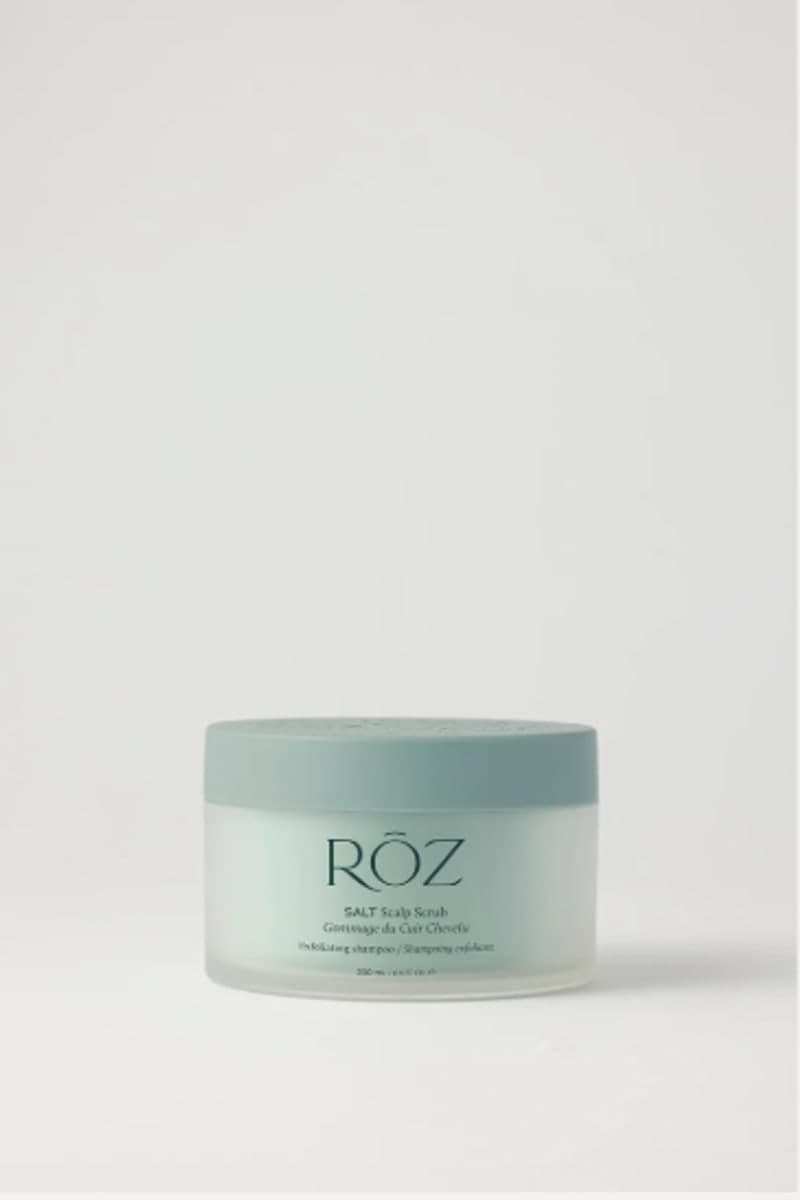
Dry shampoo refreshes without cleaning, so what collects at the root remains a wash-day question. Salt Scalp Scrub is one RŌZ wash-day option designed to remove buildup, and Foundation Shampoo is the shampoo step. Follow label directions and stop if your scalp becomes uncomfortable. Our guide to sulfates in shampoo explains how cleanser fit depends on the complete formula.
The RŌZ Guide is published by RŌZ Hair. These are commercial recommendations from the brand, not independent product reviews.
Used that way — dry shampoo to buy a day, a real cleanse to reset — the two work together instead of one covering for the other.
Sources and review note
- American Academy of Dermatology: Dry shampoo—dermatologists’ tips for getting your best results
- Natural alternatives from your garden for hair care—review of shampoo formats and functions
Where to go next
Read What Is Dry Shampoo? for the mechanism. If you have brunette or black hair, Dry Shampoo for Dark Hair covers the white-cast problem in detail.
Frequently asked questions
Does dry shampoo clean your hair?
How often can you use dry shampoo?
What are the types of dry shampoo?
Can dry shampoo replace washing?
Is dry shampoo bad for your hair?
Explore the guide
hair basics
What Is Dry Shampoo? How It Works
Dry shampoo absorbs oil at the roots and refreshes hair without washing it. Learn the mechanism, common formats, and when it is time to wash instead.
how to
Dry Shampoo for Dark Hair: Avoid the White Cast
Dry shampoo for dark hair should absorb oil without a chalky cast. Learn tinted, translucent, powder, and spray application moves that work.
Shop the Post
The RŌZ Guide is published by RŌZ Hair. These are commercial recommendations from the brand, not independent product reviews.