If you have ever stood in the shampoo aisle trying to decode “paraben-free,” “sulfate-free,” “clean,” “non-toxic,” and “color-safe” at the same time, the confusion is earned. Parabens and sulfates are not the same category of ingredient. One is a preservative family. One is a cleanser family. They get grouped together because clean-beauty labels need shortcuts, not because your hair responds to them the same way.
Shampoos that are both sulfate-free and paraben-free
A shampoo can be sulfate-free, paraben-free, both, or neither. The useful label-read is simple:
- Sulfate-free means the cleanser avoids harsh surfactants like SLS and SLES.
- Paraben-free means the formula uses a different preservative system.
- Clean shampoo is a brand or retailer standard, not a universal scientific category.
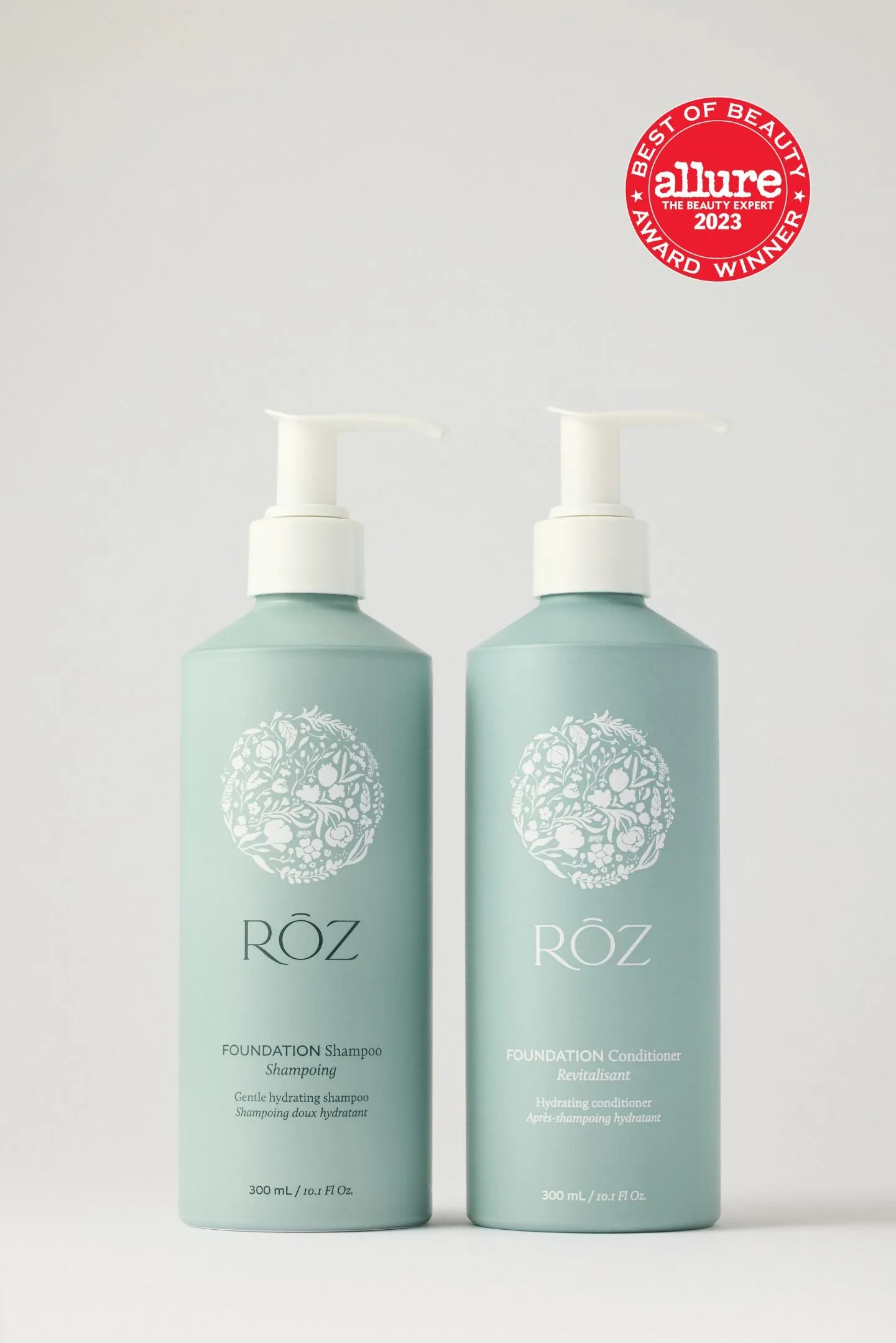
RŌZ Foundation Shampoo and Foundation Conditioner are both sulfate-free and paraben-free. That matters most if your goals are gentler cleansing, less dryness, better color retention, or a simpler clean-label routine.
Which one matters more for hair?
For the hair shaft itself, sulfate-free usually matters more. Strong cleansers can strip oil, lift the cuticle , worsen frizz, and accelerate color fade. That is a direct hair-feel and color-retention mechanism.
Parabens are different. They preserve the product so it does not grow microbes in the bottle. The debate around parabens is mostly about endocrine-safety questions, consumer trust, and clean-beauty standards, not whether parabens make hair dry on contact.
That does not mean paraben-free is meaningless. It means the reason is different. RŌZ skips parabens because our customer wants a cleaner preservative profile and because we can formulate safely without them. We do not need to pretend parabens are the same as sulfates to make that choice clear.
On parabens
Most clean-beauty brands turn parabens into a warning label. The science is more boring.
Read left to right: the concern shoppers have heard, the regulatory counterweight, and the RŌZ position.
The concern
What you have been trained to check.
Parabens are preservatives. Clean-beauty marketing often links them to endocrine or cancer fear, so shoppers read "paraben-free" as a safety shorthand.
The label habit is real, even when the science behind the fear is weaker than the headline.
The counter
Regulators do not treat cosmetic parabens as proven harm.
FDA and EU safety reviews allow specific parabens within concentration limits. The strongest public narratives come from correlation and hazard framing, not a clean causal line.
Source note
FDA cosmetic Q&A, EU SCCS opinions, and dermatology explainers generally land on concentration, exposure, and formulation context.Where RŌZ lands
We formulate paraben-free. Not because we think parabens are dangerous.
Foundation Shampoo and Conditioner use a non-paraben preservation system because customers prefer it, clean-retailer standards expect it, and the alternative system performs well.
That is a preference and positioning choice, not a scare claim.
If a formula choice is real, it can survive a plain explanation. RŌZ can say "paraben-free" without pretending parabens and sulfates do the same thing.
How to read the label
| Label phrase | What to check | What it means |
|---|---|---|
| Sulfate-free | SLS, SLES, ALS, ALES | The formula avoids the strongest common shampoo detergents |
| Paraben-free | methylparaben, propylparaben, butylparaben | The formula uses another preservative system |
| Silicone-free | dimethicone, amodimethicone, cyclopentasiloxane | The formula avoids common smoothing polymers that can build up |
| Color-safe | surfactants, pH, dye-depositing claims | The formula should reduce fade, not just avoid sulfates |
| Clean | Retailer or brand standard | Read the actual ingredient list; standards differ |
What replaces sulfates?
Sulfate-free shampoos usually rely on milder surfactants such as coco-glucoside, decyl glucoside, cocamidopropyl betaine, sodium cocoyl isethionate, or sodium lauroyl methyl isethionate. These can still clean well, but they tend to produce less foam and less of that squeaky-clean feel.
Less squeak is often the point. Hair that feels squeaky clean in the shower can feel dry, rough, or frizzy once it dries.
What replaces parabens?
Paraben-free formulas commonly use preservative systems such as phenoxyethanol, sodium benzoate, potassium sorbate, ethylhexylglycerin, benzyl alcohol, or organic-acid blends. None of these are automatically better in every formula. The question is whether the finished product is preserved safely and tested properly.
This is why “chemical-free” is not a useful phrase. Shampoo is chemistry. The better question is whether the chemistry is appropriate for the job.
When paraben and sulfate-free is worth it
It is worth prioritizing if:
- Your hair is dry, curly, color-treated, or frizz-prone
- Your scalp gets itchy after conventional shampoo
- You want a clean-label routine without decoding every bottle
- You use conditioner consistently and do not need a stripping wash every time
- You want fewer potential irritant or trust-friction ingredients in one routine
It may not be enough if:
- You have heavy wax, silicone, or dry-shampoo buildup
- Your scalp symptoms are medical rather than cosmetic
- You expect a shampoo to fix damage, thinning, or hard-water minerals by itself
The RŌZ position
We skip SLS and SLES because they are more stripping than most hair needs in a daily cleanser. We skip parabens because the brand standard and customer expectation are cleaner without compromising preservation. We skip silicones in the Foundation routine because we want softness and slip without relying on a film that can build up.
That is the whole clean-label argument: not “everything else is toxic,” but “we can make this formula perform beautifully without those shortcuts.”
Frequently asked questions
Are parabens and sulfates the same thing?
What shampoos are both paraben and sulfate-free?
Are parabens actually dangerous?
Can paraben and sulfate-free shampoo clean oily hair?
Featured in this article