Harsh detergents aren’t just drying — for dyed hair, they’re the leading cause of fade between appointments. If you’re looking for a sulfate free shampoo for color treated hair, the answer isn’t just “find one without SLS on the label.” It’s understanding what those cleansers actually do to your hair and your color, so the formula you choose is doing the right job. This is that explanation.
Why Sulfate-Free Matters More for Color-Treated Hair
Most discussions about gentle shampoo focus on dryness, frizz, and scalp sensitivity. Those are real concerns. But for anyone with professionally or at-home colored hair, there’s a more specific reason to care about what’s in your cleanser — and it has to do with how color actually sits in the hair.
The short answer
Sulfates are powerful cleansers. They’re efficient at removing oils, product residue, and debris from the scalp and hair shaft. That efficiency is exactly the problem. The same mechanism that strips sebum also opens the hair’s outer layer — the cuticle — wide enough for dye molecules to escape with every wash. Gentler alternatives clean effectively without that level of cuticle disruption, which means your color stays where you put it.
Who this applies to
This matters whether you’re maintaining a permanent color, a demi-permanent gloss, highlights, balayage, or a semi-permanent treatment. The degree of concern is different by color type — permanent dyes penetrate deeper and resist fade better than surface-coated pigments — but all colored hair benefits from a gentler wash protocol. Even gloss treatments and toners, which coat the cuticle rather than penetrating it, will last dramatically longer with a shampoo that doesn’t aggressively lift the outer layer of each strand.
Color-treated hair is structurally different
Coloring — especially lightening — changes the hair’s mechanical properties. The cuticle scales are more porous after processing. The cortex, where permanent pigment lives, is more permeable. Hair that’s been lightened or repeatedly colored has fewer intact lipids on the surface, meaning the barrier that normally keeps things in (and harsh cleansers out) is already compromised. Aggressive detergents on that structure accelerate every problem: fade, dryness, frizz, and breakage.
How Harsh Detergents Fade Hair Color: The Chemistry Explained
This isn’t abstract. There’s a well-understood mechanism behind why certain shampoos accelerate fade, and knowing it helps you make better product decisions.
Cuticle lift and color escape
The cuticle is made up of overlapping scales that lay flat when hair is healthy and at its natural pH. When those scales lift — from heat, alkaline water, harsh cleansers, or mechanical friction — the interior of the shaft is exposed.
For dyed hair, that opening is an exit point. Oxidative dyes are embedded in the cortex, but they’re not chemically bonded to the fiber in a way that’s permanent. Every time the cuticle lifts significantly, some dye migrates out. Over enough washes, this is what fade looks like: not a sudden loss, but slow leaching with each shampoo.
Gentler surfactants clean without requiring the cuticle to open as far. The scales stay closer to their resting position, which means less dye escapes per wash.
Oxidative dyes vs direct dyes — they fade differently
Not all color is the same chemistry, and understanding the difference shapes your wash protocol.
Oxidative dyes — the permanent formulas a colorist applies with developer — use hydrogen peroxide to open the cuticle, deposit color precursors into the cortex, and then the precursors oxidize to form large pigment molecules that can’t easily escape. These are the most fade-resistant colors, but “resistant” doesn’t mean immune. The pigment molecules are still subject to migration when the cuticle is repeatedly and aggressively lifted by harsh cleansers.
Direct dyes — semi-permanent and demi-permanent formulas, glosses, toners, some vivids — coat the outside of the cuticle rather than penetrating into the cortex. These are dramatically more vulnerable to wash-out. They’re coated, not embedded. Every wash is a friction event. A conventional shampoo on a fresh toner or semi-permanent color is essentially stripping money from your last salon appointment.
What the research says
As reviewed by Dias (2015) in International Journal of Trichology, surfactants with a high cleansing index disrupt the hydrophobic F-layer of the cuticle — the outermost lipid coating that protects hair from environmental and chemical insult. Once that layer is compromised, the cuticle scales are less able to maintain their sealed position during washing, and solute loss accelerates. This is the structural mechanism behind color fade: a documented consequence of repeated high-cleansing surfactant exposure on chemically processed hair.
The 48-Hour Rule: When to First Wash After Coloring
You’ve heard colorists say “don’t wash for 48 hours.” Most people assume it’s about the color settling. It’s more specific than that — and understanding the actual chemistry makes it easier to follow when you’re tempted to wash sooner.
What’s happening during those 48 hours
When a permanent color is applied, the developer (hydrogen peroxide) opens the cuticle and oxidizes the dye precursors inside the cortex. The resulting color molecules are large, but the oxidation process doesn’t complete instantly when you rinse. The full cross-linking and color stabilization continues for up to 48 hours after the service. During that window, the cuticle is at its most vulnerable: it’s been forced open, the cortex is still completing its chemistry, and the color molecules are most susceptible to being washed out before they’ve fully set.
Shampooing during that window — especially with an aggressive cleanser — is the worst possible timing. You’re introducing mechanical friction, hot water, and surfactants to a cuticle that’s at maximum permeability. The color loss in a single wash at this stage can represent days’ worth of fade under normal conditions.
Why colorists insist on it — the oxidation window
This isn’t an arbitrary “let it set” rule. The chemistry has a specific timeline:
- 0–12 hours post-color: Oxidation still actively completing. Cuticle is maximally open.
- 12–24 hours: Oxidation winding down. Cuticle beginning to reseal.
- 24–48 hours: Color largely set. Cuticle approaching its post-color equilibrium.
The 48-hour guideline exists because colorists want to ensure the full oxidation window has passed before introducing wash chemistry. Even a gentle shampoo disrupts the process during the first day.
What to do if you have to wash earlier
Life doesn’t always cooperate with a 48-hour hold. If you need to wash before the window closes: use cool water only, apply conditioner before shampoo to coat the lengths first, work shampoo into the scalp only, and rinse fast. Minimal contact time, minimal cuticle disruption. It won’t be perfect, but it limits the damage significantly.
Permanent vs Semi-Permanent Color: Does It Change What Shampoo You Need?
It does — in both how quickly the color fades and how urgently a gentle cleanser matters. The dye chemistry determines the vulnerability.
Permanent dye — oxidative, cortex-embedded
Permanent colors use oxidative chemistry. Developer opens the cuticle, dye precursors enter the cortex, they oxidize into large pigment molecules that are physically too large to exit the way they entered. The color is embedded in the hair fiber itself.
This makes permanent color the most fade-resistant category, but “most resistant” is relative. The pigment is vulnerable to two things: oxidation from UV exposure and chemicals (including harsh cleansers and hot water), which can degrade the pigment molecules themselves over time; and cuticle disruption that allows gradual solute migration. Gentle cleansers protect both angles — they don’t add oxidative stress, and they don’t force the cuticle open with every wash. The pigment molecules that fade first are the smaller, brighter ones — which is why vivid reds and bright copper tones fade faster than cool browns or deep blacks.
Semi-permanent and demi-permanent — cuticle-coated, porous escape
Semi-permanent color doesn’t use developer. The dye molecules coat the outside of the cuticle rather than penetrating it. This means they sit in exactly the location that aggressive cleansers target.
A demi-permanent formula uses a low-volume developer, which allows partial penetration — deeper than semi-permanent, but not as far as permanent. These dye molecules aren’t cross-linked in the same way, making them easier to lift with each wash cycle.
For anyone using semi or demi formulas — including the glosses and toners that maintain blonde brightness or refresh brunette depth — a gentle cleanser isn’t a nice-to-have. It’s the difference between a gloss that lasts three to four weeks and one that’s gone in ten days.
Gloss treatments and toners
Glosses and toners coat and temporarily stain the cuticle surface — beautiful when fresh, and completely dependent on the cuticle staying closed. Harsh surfactants dismantle this in a handful of washes. A gentle, slightly acidic formula in the 4.5–5 pH range is what keeps that brass at bay.
pH and Your Hair Color: Why Formula pH and Water Quality Matter
pH is underrated in hair care conversations. It’s not just about whether a formula is “pH-balanced” — it’s about the specific pH window that keeps the cuticle closed, and why most shower water works against that.
The 4.5–5.5 cuticle-seal zone
Healthy hair has an isoelectric point around pH 3.67, and the cuticle stays flat and sealed when the hair and product environment sits in the slightly acidic range of 4.5 to 5.5. As Robbins (2012) documents in Chemical and Physical Behavior of Human Hair, the cuticle’s structural proteins respond to pH changes in measurable ways — alkaline environments cause swelling of the cortex and lifting of the cuticle scales, while acidic environments promote cuticle closure and reduce fiber swelling.
For color-treated hair, this means a shampoo that sits in the 4.5–5.5 pH range actively helps preserve color with every wash — not just by being “gentle” in surfactant choice, but by keeping the physical structure of each strand in the configuration that holds dye inside.
Alkaline formulas — including many conventional shampoos, which can run pH 6–7.5 — do the opposite. They swell the cuticle, open the scales, and create the exact conditions for dye to leach out.
Why most tap water works against you
Even with a pH-balanced shampoo, you’re rinsing with water that may undermine your effort. Tap water in most US cities runs at pH 7 to 8.5 — significantly more alkaline than the cuticle’s ideal range. Hard water compounds this by depositing calcium and magnesium on the hair shaft, trapping residue and blocking conditioner from absorbing. Mineral deposits can bind with dye molecules and cause discoloration — iron deposits create brassy tones on blondes, copper causes similar warmth shifts — while the alkaline rinse water partially undoes whatever a pH-balanced shampoo accomplished.
Acidic rinses, ACV, and pH-balanced conditioners
A diluted apple cider vinegar rinse (roughly one tablespoon in a cup of water) or a citric-acid rinse can counteract alkaline water and help the cuticle seal post-wash. This is an old salon technique with real chemistry behind it — an acidic final rinse after washing brings the hair back into the cuticle-closing range and can immediately improve shine.
pH-balanced conditioners that sit in the 3.5–5 range serve the same function in a more elegant format, and they’re easier to use consistently. The most effective color-preservation routines combine a gentle, slightly acidic shampoo with an acidic-range conditioner — both formula choices working in the same pH direction.
How Often Should You Wash Color-Treated Hair?
Wash frequency is one of the most controllable levers in color preservation, and most people wash more often than their color — or their scalp — actually needs.
The research-backed cadence
Every wash cycle is a fade event. The fewer total cycles between appointments, the more color you retain. Extending from washing daily to every other day, or from every other day to every three days, makes a measurable difference in how long color looks fresh — without sacrificing scalp health.
Cadence by color type
Blonde, highlighted, and bleached hair oxidizes and brasses fastest. The lighter the lift, the more porous the shaft. A cadence of every two to three days is typical in professional settings.
Red and copper tones are the fastest-fading in the spectrum — red dye molecules are among the smallest, migrating most easily. No more than twice a week, cool water only.
Brunette and espresso tones hold better due to higher pigment density and less porosity. Still: fewer washes, cooler water, gentler formula.
Balayage puts very porous sections on the same head as unprocessed sections. Choose a formula based on the most vulnerable part — the lightened ends.
Dry shampoo and co-washing as bridges
Dry shampoo absorbs excess sebum at the roots without introducing water, heat, or surfactants. Use it at the roots only, brushed through well to avoid buildup.
Co-washing — washing with conditioner instead of shampoo — works for any hair type on days when the scalp doesn’t need a full cleanse. It rehydrates the lengths without surfactant exposure at the mid-shaft and ends, where fade is most visible.
Gentle Clarifying: Removing Buildup Without Stripping Color
One of the genuine tradeoffs with gentle cleansers is that they’re less effective at removing heavy buildup — silicone residue, hard-water mineral deposits, dry shampoo accumulation. Managing this without stripping color requires a specific tool.
When buildup becomes the enemy
Buildup blocks conditioner penetration, dulls color, and creates an uneven surface. If your hair feels heavy, lacks shine despite hydrating treatments, or conditioner seems to sit on top instead of absorbing — buildup is likely the issue. The temptation is to use a conventional clarifying shampoo; the problem is that it solves the buildup by stripping color along with it. The better approach is selective and infrequent clarification.
Chelating agents vs harsh cleansers for a hard-water reset
A chelating shampoo — formulated with EDTA, citric acid, or phytic acid — binds to mineral ions and pulls them off the hair without requiring aggressive surfactant action. A conventional clarifying shampoo achieves similar results by sheer surfactant force, but at cost to color and moisture. The chelating formula removes minerals with less collateral damage — still a cuticle-disrupting step, but far less than a standard clarifying wash.
Monthly protocol
For most color-treated hair, a monthly chelating pass is enough to keep mineral buildup under control. Use it after the color starts looking dull or when conditioners stop performing — not on a fixed calendar schedule. Follow immediately with a deep conditioning treatment, since chelating washes are inherently drying, and avoid using them within a week of a fresh color service.
Blonde, Brunette, Red, and Balayage: Which Formula Fits Your Color?
Blonde and highlighted hair
The core vulnerability: extreme porosity and ongoing brassiness from oxidation and mineral deposits. What to prioritize: low pH (4.5–5) to keep the cuticle closed on each porous strand; no silicones, which coat blonde hair and dull brightness; antioxidant ingredients (vitamin C, vitamin E, ferulic acid) that slow oxidative yellowing; and a toning shampoo used selectively — once a week at most, not every wash.
Cool water rinses are non-negotiable for blondes. Hot water expands the porous cuticle further and accelerates the brassiness cycle.
Brunette and espresso tones
The core vulnerability: warmth loss and progressive ashiness as red and gold pigment oxidizes out first. Warmth preservation means avoiding harsh clarifiers between appointments, using antioxidant-containing formulas, and skipping silicones that can create a subtle graying effect on deep brunettes. Brunettes have more latitude on wash frequency than blondes — pigment density is higher, and hair is often less porous if it hasn’t been lightened. The principle still holds: fewer washes, cooler water, gentler formula.
Red and copper tones
Red is the color that most rewards a disciplined wash protocol, because it’s the color most punished by a careless one.
Red dye molecules are among the smallest in the spectrum. They were the first to enter the cortex during coloring, and they’re the first to exit. On natural red hair (eumelanin-dominant), this isn’t as acute. On colored red — especially vivid reds, coppers, and auburn over-dyes — fade is visible as early as wash three or four without the right protocol.
For red and copper tones:
- Maximum wash frequency of two times per week
- Strictly cool water (this matters more for red than for any other color)
- Color-depositing conditioners or masks in the red/copper range used weekly to refresh the tone
- A gentle formula that prioritizes pH balance over fragrance, foam, or silicone coating
Balayage and hand-painted lightening
Balayage creates a gradient — very pale at the tips, transitioning to natural at the root. The tips are highly porous. The root may be completely unprocessed. This split requires a formula gentle enough for the most vulnerable part of the head, which means choosing based on the lightened sections rather than the natural ones.
Balayage clients also often struggle with buildup in the mid-length transition zone, where product tends to accumulate. A monthly chelating pass specifically at the mid-shaft, followed by conditioning, addresses this without stripping the full length.
Toning Shampoos: How to Use Purple Shampoo Without Over-Toning
Purple shampoo has become standard for blondes, but how and how often you use it makes the difference between maintained brightness and hair that looks gray or flat.
What purple shampoo actually does
Purple and blue toning shampoos work on the principle of complementary color theory: purple neutralizes yellow, blue neutralizes orange. They contain direct violet or blue dye molecules that temporarily deposit on the hair shaft during the wash, counteracting the warm tones that develop from oxidation, hard water, and UV exposure.
They’re not conditioning agents, and they’re not regular-use cleansers. They’re targeted pigment tools. The best use case is precise and infrequent — use when brassiness is visible, not on a fixed every-wash schedule.
How often — most people use it too often
The most common mistake: treating it like a regular cleanser and using it every wash. Purple pigment accumulates. After several consecutive uses, the violet deposit shifts hair from bright blonde to lavender or cool gray.
A reasonable starting point: once a week if brassiness develops quickly, once every two weeks if tone is stable. Leave a few regular washes between uses. Drugstore formulas tend to be lower concentration than salon formulas, but the principle is consistent across both.
Over-toned and fixing ashy or green tones
Over-toning presents as duller, grayer hair — or in extreme cases, a slight green cast (blue-tinted shampoo overused on remaining yellow). The fix: stop using the toning shampoo and do two to three regular gentle washes. The direct dye deposits will fade on their own. A warm-toned gloss at the affected sections can accelerate correction if the cast is significant.
Heat Styling and Hair Color: Why Shampoo Is Only Half the Battle
Choosing the right cleanser is important. But the cuticle disruption from heat styling follows the same mechanism as harsh detergent exposure — and if you’re using high heat regularly, your shampoo choice is fighting against your styling choices.
Heat lifts the cuticle the same way
High heat — flat irons, curling wands, blow dryers — causes the water inside the hair shaft to rapidly expand and force the cuticle scales outward. Structurally, this is the same mechanism as harsh cleansers: the cuticle opens, dye molecules become mobile. Thermal expansion also denatures cortex proteins over time, degrading the structural environment that holds color in place.
The 365°F threshold
Below 365°F (185°C), most well-formulated heat protectants provide meaningful cuticle defense and limit thermal protein denaturation. Above that threshold, heat protectants become less effective, and cuticle damage accelerates sharply.
For color-treated hair, keeping heat styling below 365°F — combined with a thermal protectant applied to damp hair before any heat — preserves color and structural integrity simultaneously. A gentle shampoo works best when it’s not undone by daily high-heat styling on already compromised hair.
Hard Water and Color Fade: The Hidden Enemy
Hard water is consistently underrated as a cause of color fade and dullness. Mineral deposits from calcium, magnesium, copper, and iron in tap water accumulate on the hair shaft and actively interfere with how color looks and how long it lasts.
Mineral deposits in hair
Iron deposits create brassy, orange, or reddish tones on blonde and light hair — oxidized iron staining the porous cuticle from the outside. Copper causes similar warmth shifts. Calcium and magnesium create a dull coating that blocks light reflection and makes color look flat regardless of its condition. The accumulation is gradual; after two months without chelation in a hard-water home, the buildup is often visible to a trained eye.
Why filters and chelating treatments help
A shower filter (KDF or vitamin C type) reduces iron, chlorine, and heavy metals at the source. Chelating shampoos address what’s already on the hair. If your color fades or brasses faster than expected despite a gentle wash protocol, water chemistry is worth investigating before assuming the formula or your colorist is the issue.
What to Look For on the Ingredient Label
Not all products claiming to be gentle actually qualify. Here’s how to read a label for color-treated hair without getting lost in ingredient lists.
Ingredients that help
Gentle surfactants: Cocamidopropyl betaine, sodium cocoyl isethionate (SCI), decyl glucoside, sodium lauroyl methyl isethionate. These clean without the cuticle-disrupting force of SLS or SLES . Look for them in the first five ingredients — that’s where the primary wash agents live.
Proteins: Hydrolyzed keratin, silk amino acids, wheat protein. Processed color creates micro-gaps in the cuticle. Small protein fragments temporarily fill those gaps, smoothing the surface and slowing moisture and dye escape. The keyword is “hydrolyzed” — the protein must be broken into fragments small enough to actually interact with the fiber, not just coat the outside.
Lipid-mimetics: Fatty alcohols (cetyl, stearyl), plant oils (argan, marula), ceramides. Color processing strips lipids from the cuticle surface. Lipid-mimetic ingredients help rebuild that protective coating, supporting the cuticle’s ability to stay closed.
Antioxidants: Vitamin E (tocopherol), vitamin C, green tea extract. These slow oxidative degradation of dye molecules — most relevant for reds and blondes, where warm pigment oxidizes first.
Ingredients that hurt — even in “gentle” formulas
Drying alcohols: Isopropyl alcohol, alcohol denat, SD alcohol. Not all alcohols are problematic (fatty alcohols are fine), but short-chain drying alcohols dehydrate the hair shaft and contribute to cuticle lift. They’re sometimes used as preservatives or to improve formula texture — check the ingredient list for any alcohol that isn’t cetyl, stearyl, or cetearyl.
Harsh chelating agents at high concentrations: EDTA is useful for monthly hard-water resets, but some formulas include it at levels high enough to strip color-adjacent mineral bonds from regular use. If EDTA is in the first five ingredients of your everyday shampoo, it may be working against color retention.
Highly alkaline formulas: pH above 6. Not always labeled, but an indirect indicator is heavy use of amine-based pH adjusters (triethanolamine, diethanolamine) in the first half of the ingredient list.
The -yl vs -eth heuristic
The simplest label shortcut: harsh cleansers end in -yl (sodium lauryl sulfate, ammonium lauryl sulfate); milder variants end in -eth (sodium laureth sulfate, ammonium laureth sulfate). The -eth variants went through an extra processing step that softens their action. Neither is ideal for dyed hair, but knowing the pattern lets you quickly identify whether a “gentle” claim is substantiated.
What Mara looks for in a formulation
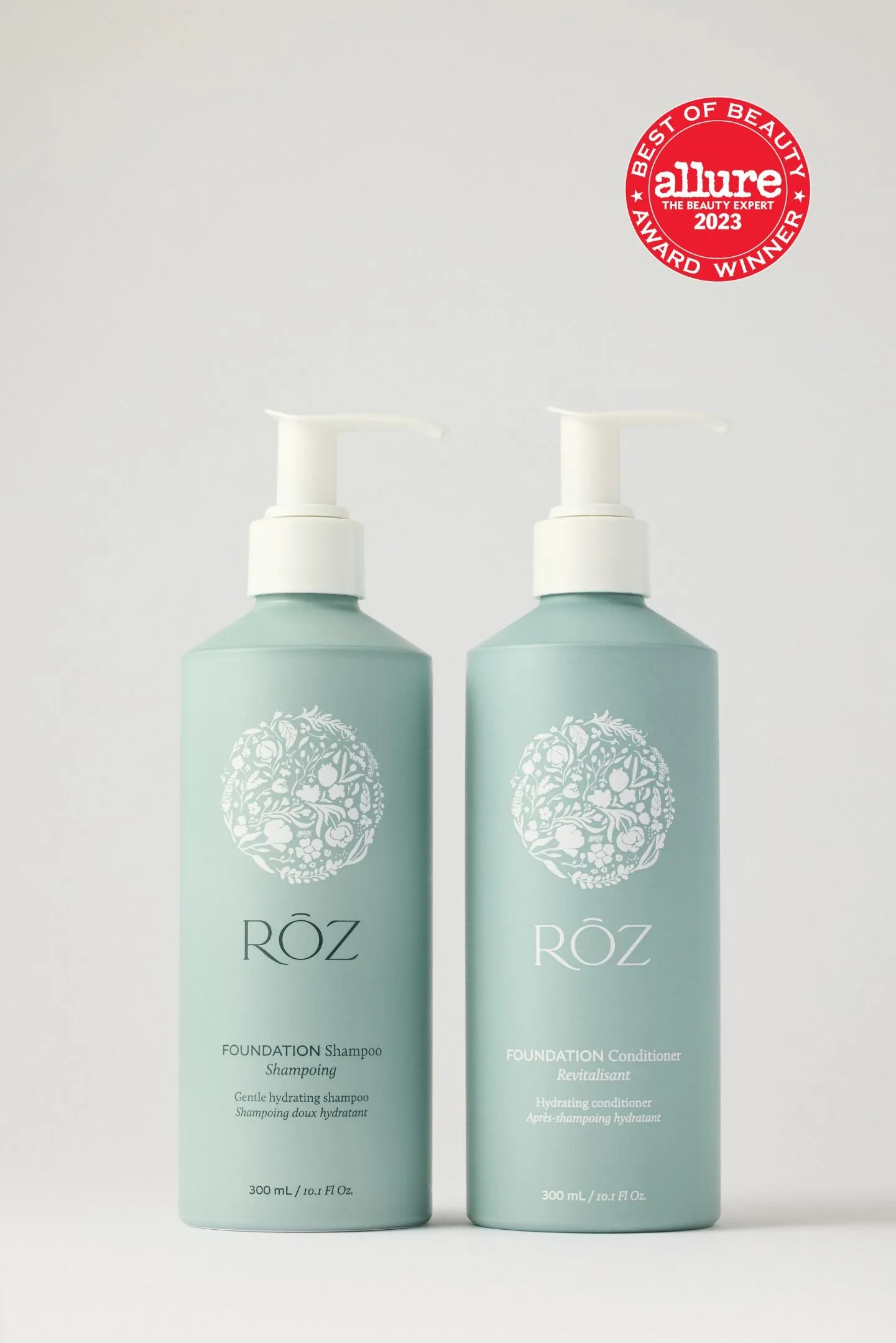
The Foundation Shampoo was built around these priorities: a primary surfactant that doesn’t exceed the cuticle’s tolerance for disruption; hydrolyzed proteins sized for genuine fiber interaction; a pH that stays in the 4.5–5.5 cuticle-seal range; no silicones or heavy emollients that would require a clarifying chase. The goal was a shampoo that works for color-treated hair without requiring the user to know the chemistry — the formula does the right thing by default.
What Mara Uses: Foundation Shampoo and Why
Most of the color-safe market is conventional shampoo with a “color safe” sticker and a minimal formulation difference. For professionally colored hair, minimal difference isn’t enough.
Why I formulated it this way
I’ve worked with color-treated hair for over two decades. The recurring problem: clients spending real money on color services and undoing a meaningful portion of it at home, every wash, because their shampoo was pulling the cuticle open as thoroughly as the color appointment had.
The design goal was specific: clean the scalp effectively, leave the lengths undisturbed, stay in the pH range where the cuticle naturally seals. Surfactants chosen by cuticle impact, not foam or fragrance. No silicones — they mask the problem short-term but require periodic aggressive clarifying that defeats the color preservation goal.
Who it’s for
Formulated for all hair types, but particularly suited for permanently colored hair, highlighted or bleached hair where porosity is high, gloss and toner maintenance, and anyone on a two-to-three-day wash schedule who wants in-between days to look like wash day.
Routine recommendation
Shampoo focused on the scalp — the lengths get enough from rinse water. Follow with a conditioning treatment in the 3.5–5 pH range. On red or copper tones, add a color-depositing mask once a week. If you’re in a hard-water market, run a chelating pass monthly before the regular wash. Layered, but none of it complicated.
Frequently asked questions
Does sulfate-free shampoo actually make hair color last longer?
How long should I wait to wash my hair after coloring?
Can I use sulfate-free shampoo on non-colored hair?
What's the difference between sulfate-free and color-safe?
Will my hair feel different when I switch to sulfate-free?
Do salons use sulfate-free shampoo?
Can sulfate-free shampoos cause buildup or make hair feel weighed down?
Does sulfate-free shampoo prevent my color from becoming brassy?
Is drugstore sulfate-free as good as salon brands?
How many washes before I notice a difference in fade?
Featured in this article