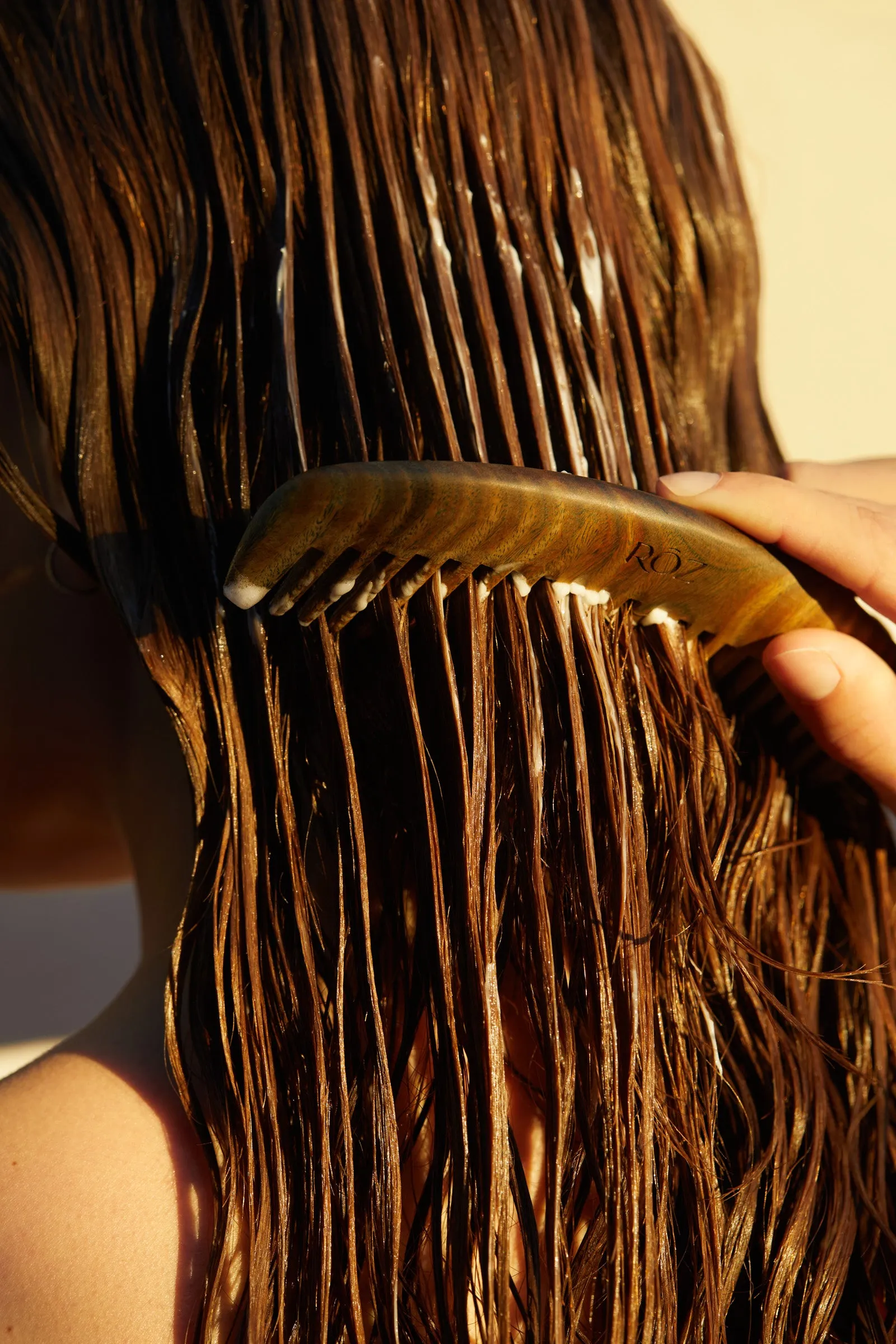
If you have curly hair and sulfate-free shampoo has ever made your wash day better, worse, or strangely waxy, you are not imagining it. Curls are more sensitive to cleanser choice because the shape of the strand changes how oil, water, conditioner, and product move. The useful question is not whether sulfates are bad. It is whether a strong cleanser is the right tool for your curl pattern, product load, and scalp.
Is sulfate-free shampoo better for curly hair?
Usually, yes. Curly and coily hair tends to be drier because scalp oil has a harder time traveling down a curved strand. A strong surfactant like sodium lauryl sulfate can remove that limited oil faster than the curl can replace it, which shows up as frizz, roughness, tangles, and less definition.
Sulfate-free shampoo uses gentler surfactants to clean the scalp without stripping the strand as aggressively. That makes it especially helpful for:
- Wavy hair that loses shape after wash day
- Curly hair that frizzes before it fully dries
- Coily hair that needs more slip and fewer detangling breaks
- High-porosity curls that absorb water quickly but lose it just as fast
- Color-treated curls that fade or feel rough after shampooing
The caveat: sulfate-free does not mean residue-free. If your routine includes heavy butters, waxy gels, non-water-soluble silicones, or frequent dry shampoo, you may still need a periodic clarifying wash.
Why curls react differently to sulfates
The curl pattern creates three practical differences.
Sebum travels more slowly
On straight hair, scalp oil can move down the strand relatively easily. On curly hair, every bend slows that movement. That is why curls can feel oily at the root and dry at the ends in the same week.
The cuticle is easier to disrupt
Curved fibers have more points of friction. Brushing, sleeping, diffusing, and detangling all put pressure on the cuticle . A harsh cleanser adds one more disruption event, and curls show that disruption quickly.
Product load is higher
Curl routines often involve leave-ins, creams, gels, oils, and refresh sprays. A gentle shampoo has to remove enough product to keep the scalp clean while preserving enough moisture to keep the curl pattern intact. That balance is the whole category.
What to look for on the ingredient list
A good sulfate-free curly shampoo should name its cleansing system clearly. You are looking for mild surfactants, not just a front-label claim.
| Ingredient | What it does | Curl read |
|---|---|---|
| Coco-glucoside | Sugar-derived mild cleanser | Gentle, low-stripping, useful for dry curls |
| Decyl glucoside | Plant-derived cleanser | Mild, good for sensitive scalps and wavy-to-curly hair |
| Cocamidopropyl betaine | Amphoteric cleanser | Adds foam and slip; often balances harsher cleansers |
| Sodium cocoyl isethionate | Creamy coconut-derived cleanser | Richer lather, good for curls that miss foam |
| SLS / SLES / ALS | Strong anionic cleansers | Effective reset wash, usually too stripping as a daily curly cleanser |
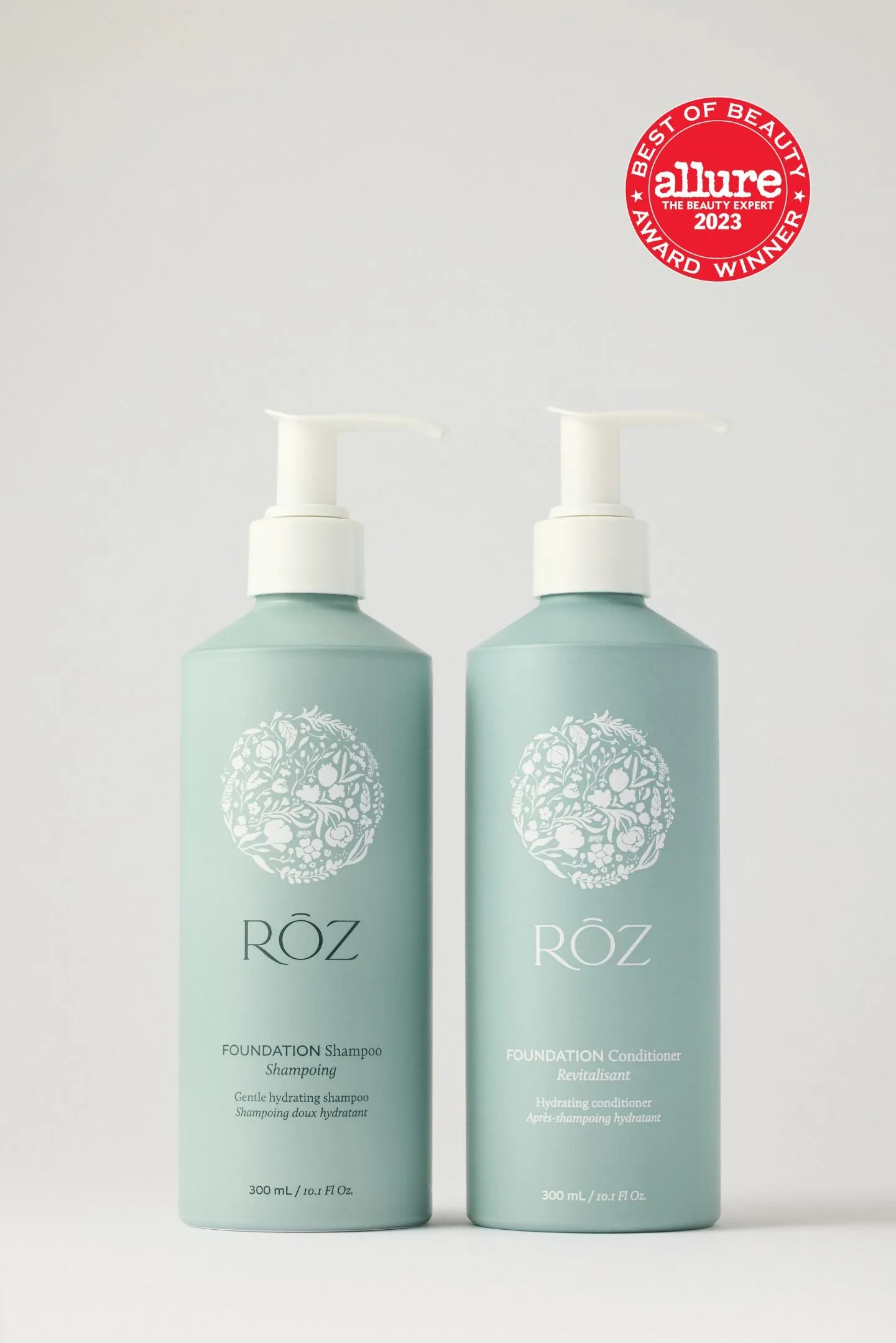
RŌZ Foundation Shampoo is built around a coconut-derived, sulfate-free cleansing system and avoids silicones, drying alcohols, SLS, and SLES. That makes it curl-compatible without pretending every curl needs the same routine.
The curly-hair sulfate-free decision matrix
| Curl situation | Best cleanser move | Why |
|---|---|---|
| 2A-2C waves that go flat | Lightweight sulfate-free shampoo | Preserves shape without coating the root |
| 3A-3C curls with frizz | Sulfate-free shampoo + conditioner every wash | Frizz usually means moisture loss plus cuticle lift |
| 4A-4C coils | Gentle shampoo on scalp, rich conditioner on lengths | Cleansing should not create a detangling crisis |
| Heavy gel or butter routine | Sulfate-free most washes, clarifying reset monthly | Gentle formulas cannot always remove waxy buildup alone |
| Itchy scalp or flakes | Diagnose first | Dandruff, dermatitis, and buildup need different tools |
| Fresh color on curls | Sulfate-free, cool water, lower heat | Color and curl structure both dislike cuticle lift |
What if sulfate-free shampoo makes curls feel waxy?
That usually means one of three things.
You have old buildup
If silicone, wax, hard-water minerals, or heavy butter is already sitting on the strand, a gentle cleanser may not remove it in one wash. Do a reset wash first, then start the sulfate-free routine.
You are using too much conditioner at the root
Curly hair needs conditioner, but most roots do not need the same amount as the ends. Keep conditioner from mid-lengths down unless your scalp is genuinely dry.
The formula is too rich for your curl density
Fine curls need a different sulfate-free formula than coarse coils. If the hair feels coated, choose a lighter cleanser rather than assuming sulfate-free is wrong.
How to wash curly hair with sulfate-free shampoo
- Saturate the hair completely before shampoo.
- Apply shampoo to the scalp, not the lengths.
- Massage with fingertips for at least 60 seconds.
- Let the rinse carry cleanser through the ends.
- Condition every wash, with extra slip where tangles form.
- Clarify only when buildup symptoms show up: dullness, waxy roots, limp curl, or conditioner sitting on top.
What sulfate-free shampoo cannot do for curls
It cannot repair split ends. It cannot replace conditioner. It cannot make a heavy styling routine disappear without clarification. It cannot diagnose dandruff or scalp psoriasis. And it cannot turn a formula that is wrong for your density into the right one just because the label says sulfate-free.
That honesty matters because curly hair is where clean-beauty overpromising does real damage. The better standard is simple: your shampoo should leave your scalp clean, your ends less rough, and your curl pattern easier to style.
Frequently asked questions
Is sulfate-free shampoo best for curly hair?
Is sulfate-free shampoo good for wavy hair?
Can curly hair ever use sulfates?
What ingredients should curly hair avoid in shampoo?
Featured in this article