hair basics
Sulfates in Shampoo: What They Do and Who May Prefer Sulfate-Free
By The RŌZ Team · Published August 12, 2026 · Updated August 13, 2026
Sulfates in shampoo are often framed as either the reason hair gets truly clean or an ingredient everyone should avoid. Neither answer is complete. Sulfates are effective cleansers. Whether they suit you depends on the whole formula, how much oil and product you need to remove, and how your scalp and lengths feel after repeated use.
For the larger decision framework, start with our guide to haircare ingredients.
What are sulfates in shampoo?
Sulfates are a group of anionic surfactants used in many shampoos. A surfactant has one part attracted to oil and another attracted to water. That structure helps loosen sebum, sweat, dirt, and styling residue so they can be carried away during rinsing. A review of shampoo and conditioner science explains how modern formulas combine surfactants to reach different cleansing levels.
Common sulfate surfactants include:
- Sodium lauryl sulfate (SLS)
- Sodium laureth sulfate (SLES)
- Ammonium lauryl sulfate
- Ammonium laureth sulfate
These are not interchangeable with every cleansing ingredient that contains the letters “sulf.” Sodium C14-16 olefin sulfonate, for example, is a sulfonate rather than a sulfate. A sulfate-free label tells you one thing the formula excludes; it does not tell you the strength of every surfactant that remains.
What do sulfates do to hair?
Their primary job is cleansing. Lauryl and laureth sulfates are widely used because they remove oil well, foam readily, and rinse efficiently. Strong cleansing can be useful when the scalp is oily or the routine includes substantial styling-product buildup.
The tradeoff is that a formula can remove more oil than some hair and scalps find comfortable. Dermatology reviews note that heavily cleansed hair may feel rougher, duller, more tangled, or more prone to static unless the rest of the formula provides enough conditioning. That does not mean every sulfate shampoo produces that result. Concentration, the surfactant blend, pH, conditioning ingredients, washing frequency, and technique all change the outcome.
“The goal is a balancing act: cleanse thoroughly enough without leaving the scalp or strands feeling stripped or dry.”
— Mara Roszak, RŌZ founder and celebrity stylist; lightly edited from interview for clarity
Are sulfates bad for your hair?
No—not as a category. Sulfates are effective cleansing tools, not inherently “bad” ingredients. The better question is whether a particular shampoo gives you the cleansing level you need without leaving your scalp tight or your lengths rough.
You may want to reconsider your current formula if, after repeated washes, you notice:
- A tight, uncomfortable scalp immediately after cleansing
- Lengths that feel rough or unusually tangled
- Color-treated or bleached hair that becomes harder to keep conditioned
- Curls that feel less soft after washing. That can reflect the cleanser, the rest of the formula, washing technique, water, or the hair’s prior condition.
Those signs do not prove sulfates are the cause. Fragrance, preservatives, washing frequency, water temperature, pH, technique, and scalp conditions can also matter. Persistent itching, burning, redness, or scaling deserves evaluation by a dermatologist rather than an ingredient-label experiment.
Who may prefer sulfate-free shampoo?
Sulfate-free shampoo may be worth trying if your current shampoo consistently feels too cleansing, especially when your hair is dry, bleached, color-treated, curly, coily, or frequently heat-styled. Reviews of hair-cosmetic science commonly position gentler or amphoteric surfactant systems for chemically treated hair, while stronger anionic systems may suit oilier hair. See this clinical review of hair cosmetics and surfactant classes.
But hair type is not a verdict:
| Your situation | What to prioritize |
|---|---|
| Oily scalp or heavy styling buildup | Enough cleansing and a thorough rinse; sulfate-free can work, but not every gentle formula will be sufficient |
| Fine hair that goes flat | Clean roots without a heavy conditioning film |
| Curly, coily, dry, or bleached hair | A wash result that leaves the lengths manageable rather than rough |
| Color-treated hair | A color-safe complete formula plus water temperature and wash frequency that suit the service |
| Sensitive or reactive scalp | A simple formula that feels comfortable; seek medical guidance for persistent symptoms |
Is sulfate-free shampoo always gentler?
No. “Sulfate-free” is not the same as “mild.” Sulfate-free shampoos still need surfactants, and those cleansers vary in strength and concentration. One formula may blend several surfactants to create rich lather and a thorough cleanse; another may prioritize a softer wash. The label alone cannot predict the result.
This is why we would not recommend choosing shampoo through a single-ingredient purity test. Check how the scalp feels after rinsing, how easily the lengths detangle after conditioning, whether the roots stay clean for a reasonable interval, and whether residue builds over time.
Does sulfate-free shampoo lather?
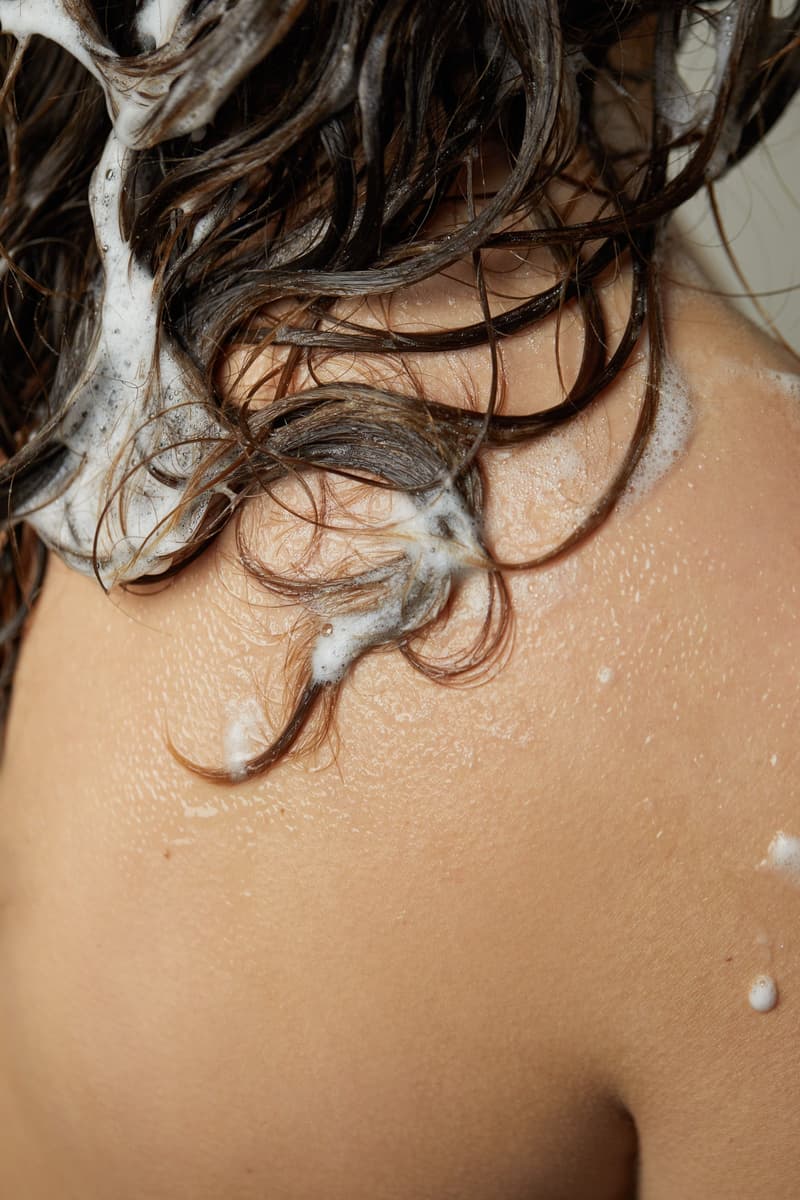
Yes. Foam is not exclusive to sulfates, and low foam does not automatically mean poor cleansing. Lather depends on the surfactant blend, water, how saturated the hair is, how much oil or product is present, and the amount of shampoo used.
Mara’s formulation brief for Foundation Shampoo was specific: she wanted sulfate-free cleansing that still produced a satisfying lather and a thorough wash. Her application technique is to soak the hair fully, focus shampoo at the scalp, add a little more water before adding more product, and rinse thoroughly. If the first wash is breaking through substantial buildup, a second small cleanse can lather more readily.
Should shampoo go on the scalp or the lengths?
Focus shampoo on the scalp, where sebum and most root-level buildup collect. The lather that runs through the lengths during rinsing is usually enough for routine cleansing. You do not need to aggressively scrub fragile ends unless they have a specific coating or buildup that needs removal.
That scalp-first method is central to Mara’s perspective because it helps separate two jobs: cleanse where oil is produced, then condition the mid-lengths and ends according to how much moisture and slip they need.
Why we made Foundation Shampoo sulfate-free
RŌZ did not remove sulfates to suggest all sulfate shampoos are harmful. The formulation goal was calibrated performance: a thorough, salon-grade cleanse without the post-wash feel Mara associates with over-cleansing.
Foundation Shampoo uses a blend of non-sulfate surfactants and is formulated to lather and cleanse before conditioner or styling. How it feels can vary with hair condition, product use, and wash routine. The useful test is the result across repeated washes — not the absence claim by itself.
The RŌZ Guide is published by RŌZ Hair. This is a commercial recommendation from the brand, not an independent product review.
For the conditioning side of that decision, read our guide to silicones in hair products.
Sources and review note
This article combines Mara Roszak’s recorded stylist perspective with consumer-facing summaries of dermatology and cosmetic-science reviews. Surfactant behavior depends on the complete formula, concentration, use pattern, and individual scalp.
- Shampoo and Conditioners: What a Dermatologist Should Know? — Indian Journal of Dermatology
- Hair Cosmetics: An Overview — International Journal of Trichology
- Hair Cosmetics for the Hair Loss Patient — Indian Journal of Dermatology
- The Shampoo pH Can Affect the Hair: Myth or Reality? — International Journal of Trichology
Frequently asked questions
What do sulfates do in shampoo?
Are sulfates bad for your hair?
Is sulfate-free shampoo better?
How can you identify sulfates in shampoo?
Does sulfate-free shampoo still lather?
Is sulfate or silicone worse for hair?
Related reading
Shop the Post
The RŌZ Guide is published by RŌZ Hair. These are commercial recommendations from the brand, not independent product reviews.